Time travel since 1954

The History of Sioux – from 1954 to Today

Since 1954, Sioux has stood for shoes where craftsmanship, quality, fit, and comfort are paramount. What began in Walheim, Swabia, with the idea of developing the traditional moccasin for feet in Germany and Europe, became a traditional German shoe brand.

Sioux has consistently been a pioneer: with new shoe concepts, special constructions, unusual advertising, and models that remain classics in shoe history to this day. Join us on a journey through more than seven decades of Sioux.
An idea becomes reality

1954

An idea becomes reality

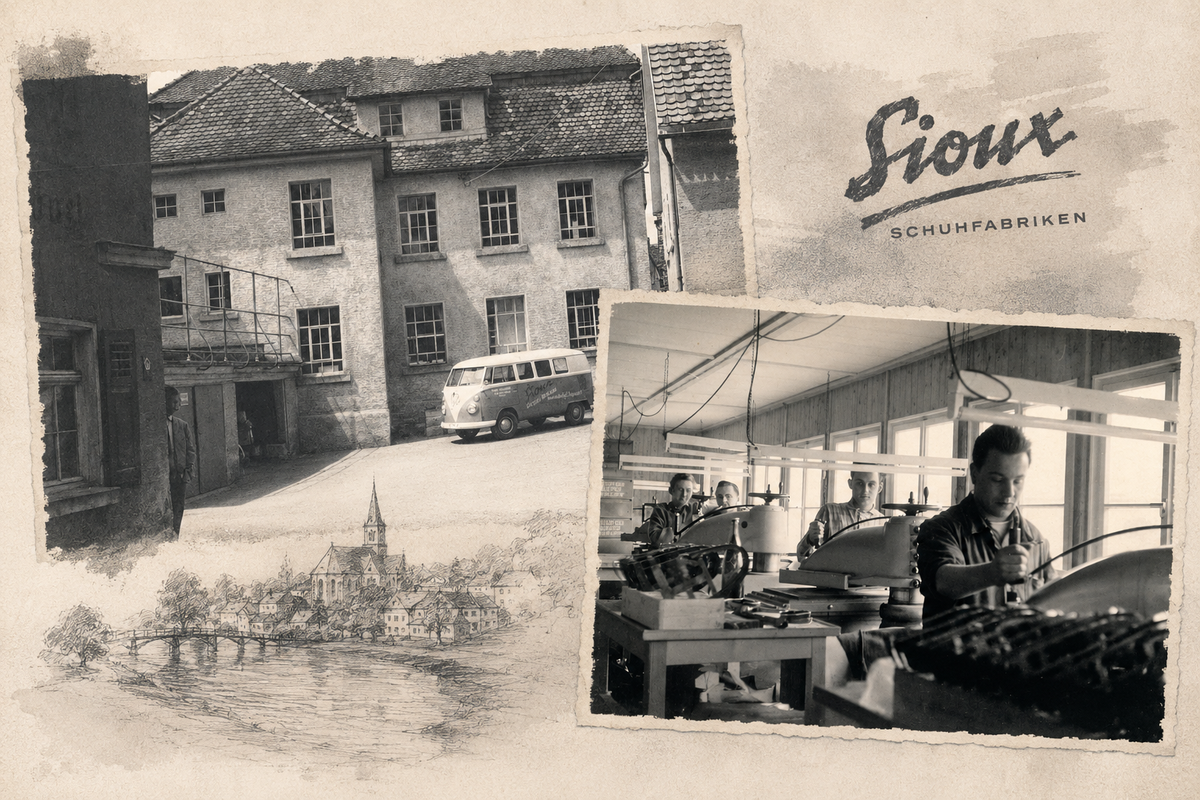
The story of Sioux begins in Walheim am Neckar, Swabia. Company founder Peter Sapper had a simple yet groundbreaking idea: to adapt the comfortable and versatile moccasins of indigenous North American peoples for people in this country.

Several reasons spoke for Walheim: Sapper could take over a former slipper factory, found experienced workers in the region, and benefited from the railway connection at the time for material delivery and shipping. The Walheim shoe factory soon became SIOUX Schuhfabriken.

From an idea, a brand is born

1956

From an idea, a brand is born

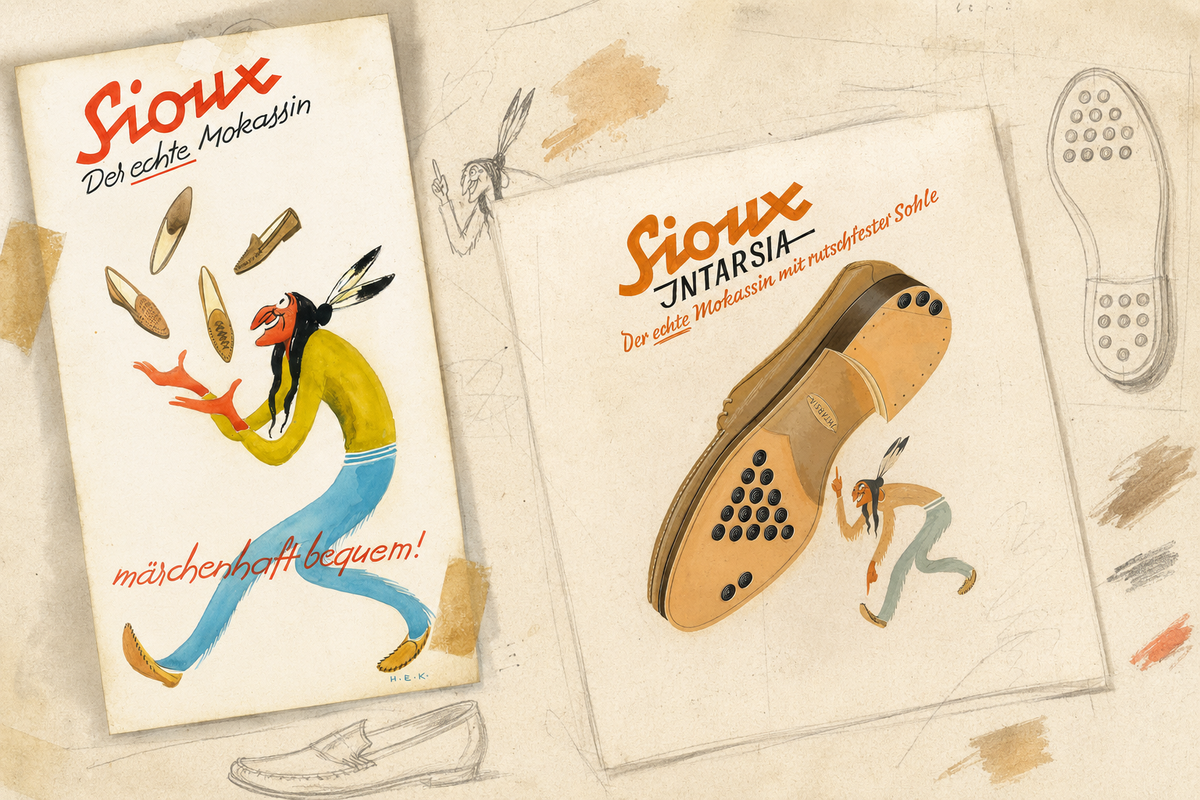
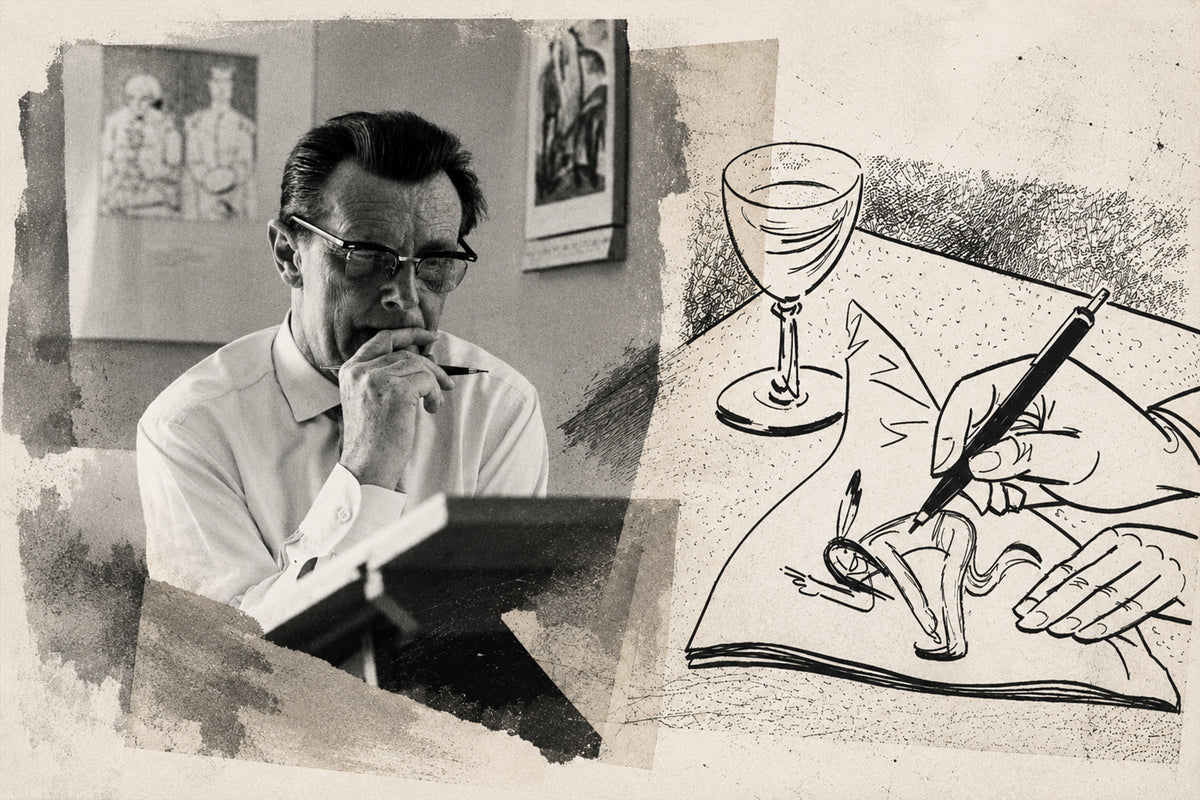
Just two years after its founding, Sioux receives its distinctive look. The draftsman and caricaturist Hanns Erich Köhler, known as HEK, develops the well-known pictographic mark of the "fabulously elastic Sioux Indian" and designs numerous advertisements and promotional motifs until the mid-1960s.

The characteristic Sioux lettering also originates during this period. As a registered trademark, the young shoe factory becomes an independent brand, celebrating its first successes at the international shoe fair GDS.

The Autoped brings movement to the footwear market

1957

The Autoped brings movement to the footwear market

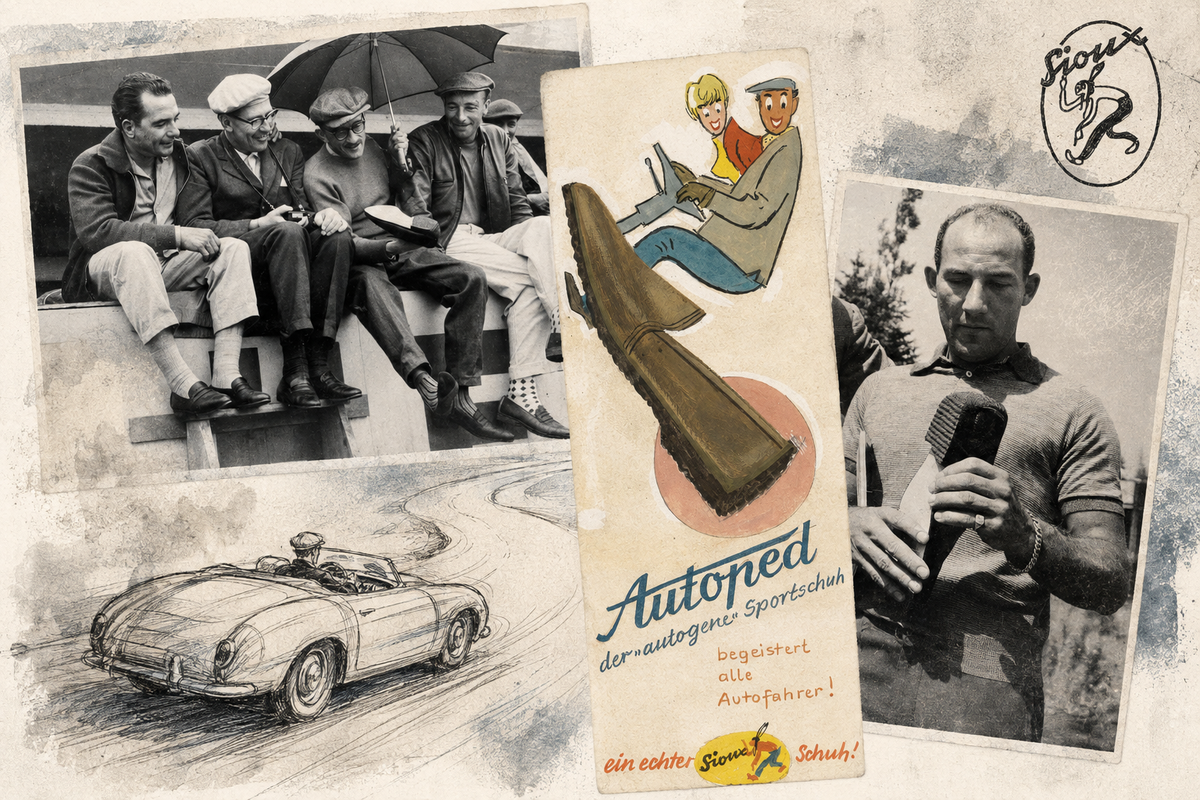
With the "Autoped," Sioux demonstrated its pioneering spirit early on. The lightweight slipper, fitting snugly to the foot, was specially developed for drivers and offered secure grip on the pedals.

With this, Sioux brought one of the first so-called driver shoes to the market – a shoe type that is now established worldwide. Its prominent wearers included racing driver Huschke von Hanstein and British Formula 1 driver Stirling Moss.

The studded sole conquers the street

1958

The studded sole conquers the street

The "Intarsia" is the next innovation. This elegant driving moccasin features a perforated leather sole with integrated rubber nubs, combining flexibility with a secure grip.

Sioux was the first company to use this construction. What would later be primarily associated with Italian moccasins thus has an important origin in German shoe development.

The Grashopper changes the shoe-wearing experience

1964

The Grashopper changes the shoe-wearing experience

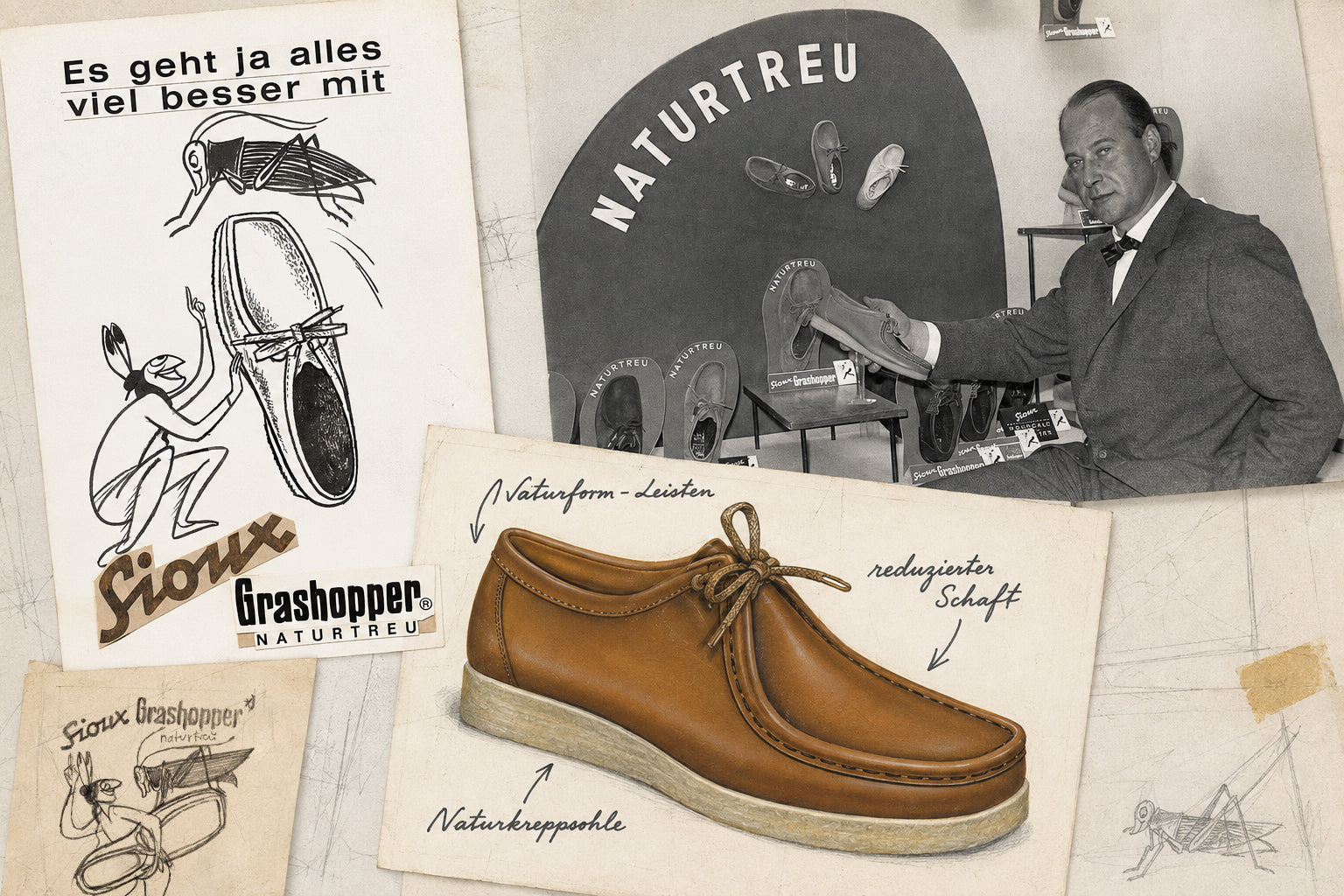
The Grashopper becomes one of the most significant models in Sioux history. Its natural last gives toes an unusual amount of freedom – at a time when narrow shapes and highly formalised shoe fashion dominated the streetscape.

However, the lifestyle of the 1960s was changing. Travel, sport, and social change brought more casualness into fashion. With its minimalist upper and characteristic natural crepe sole, the Grashopper perfectly captured this zeitgeist.

It developed into the most successful Sioux model of all time, was interpreted and copied many times, and remains an integral part of the collection to this day.

Sioux is going on TV

1967

Sioux is going on TV

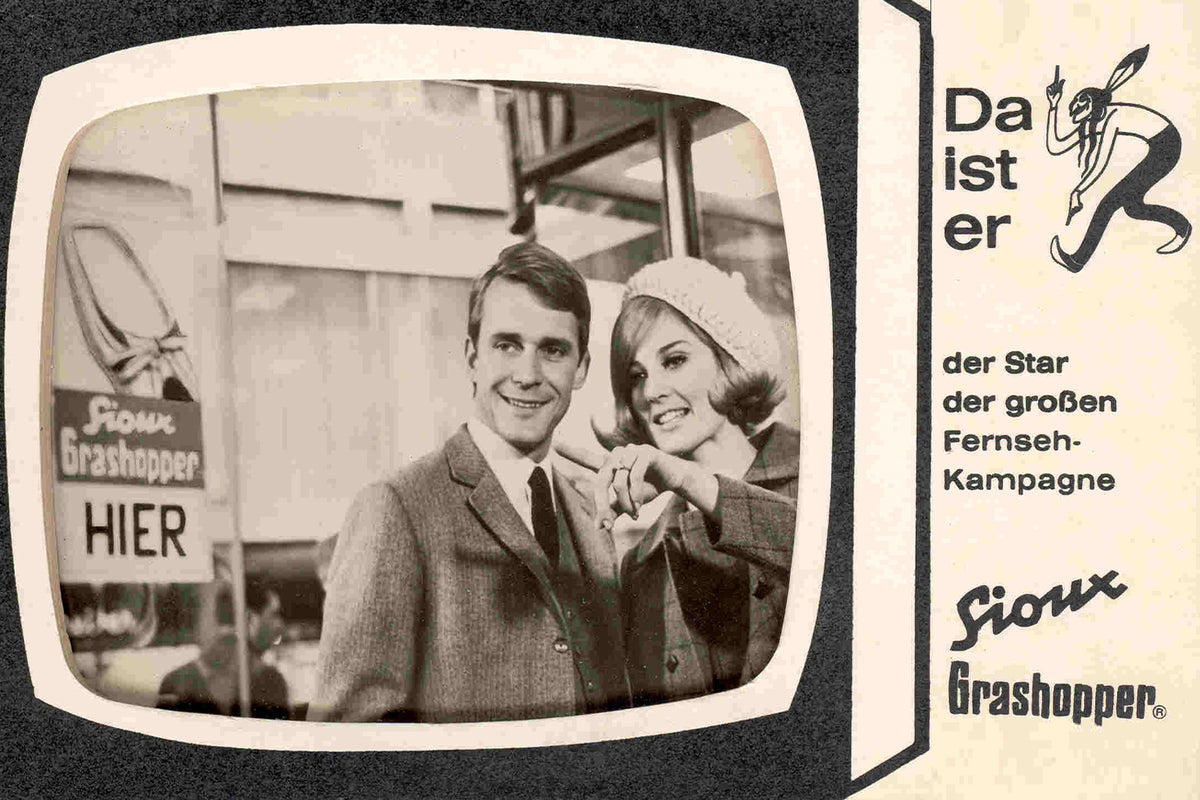
The Grashopper also writes advertising history. The first TV commercial featuring the cult model airs – at a time when television advertising was still completely new territory for shoe manufacturers.

The commercial is produced together with Inselfilm in Munich. Direction and cinematography are handled by Michael Ballhaus, who later becomes one of the most internationally renowned German cinematographers.

A distinctive visual language

1968

A distinctive visual language

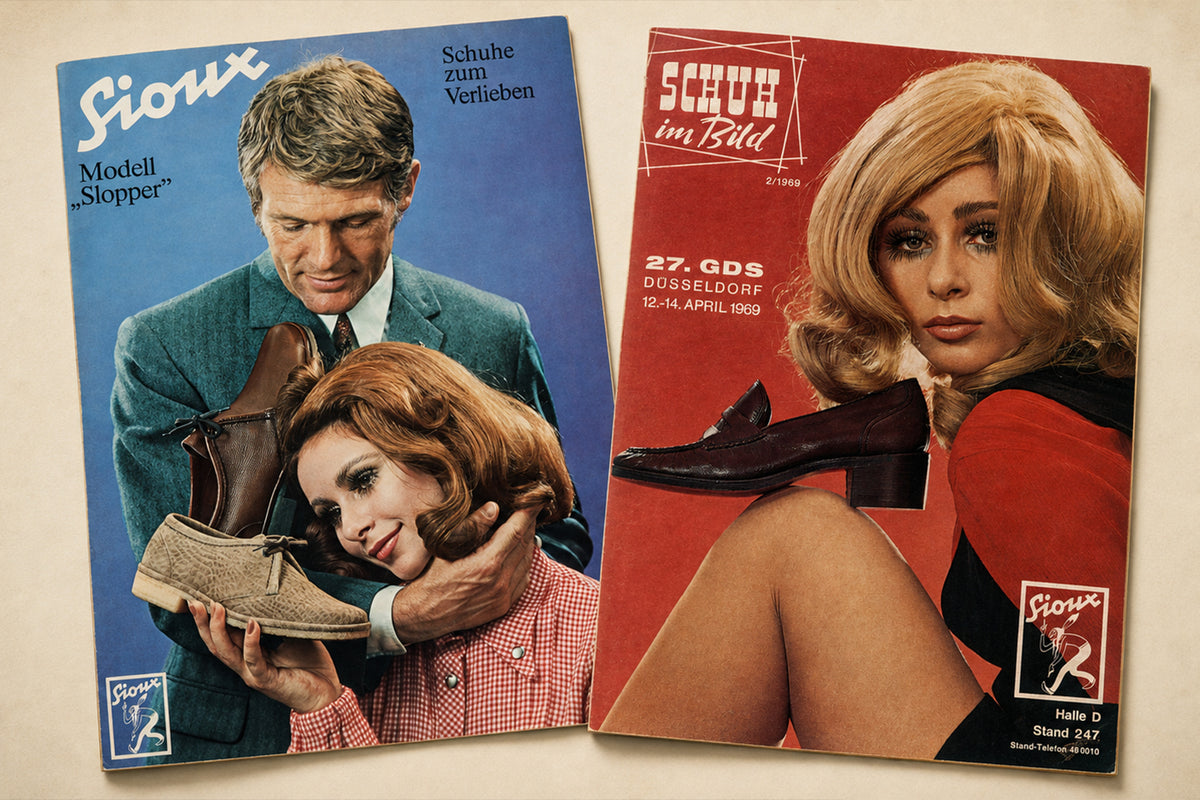
For over two decades, Sioux has worked intermittently with Stuttgart-based photographer Franz Lazi. His photographs staged models like Grashopper and Slopper in a manner that was unusually modern and graphic for the time.

Today, Lazi is considered one of the most important German architectural, advertising, and design photographers of the 20th century. His work also profoundly shaped Sioux's visual history.

The Grashopper goes to England

1970

The Grashopper goes to England

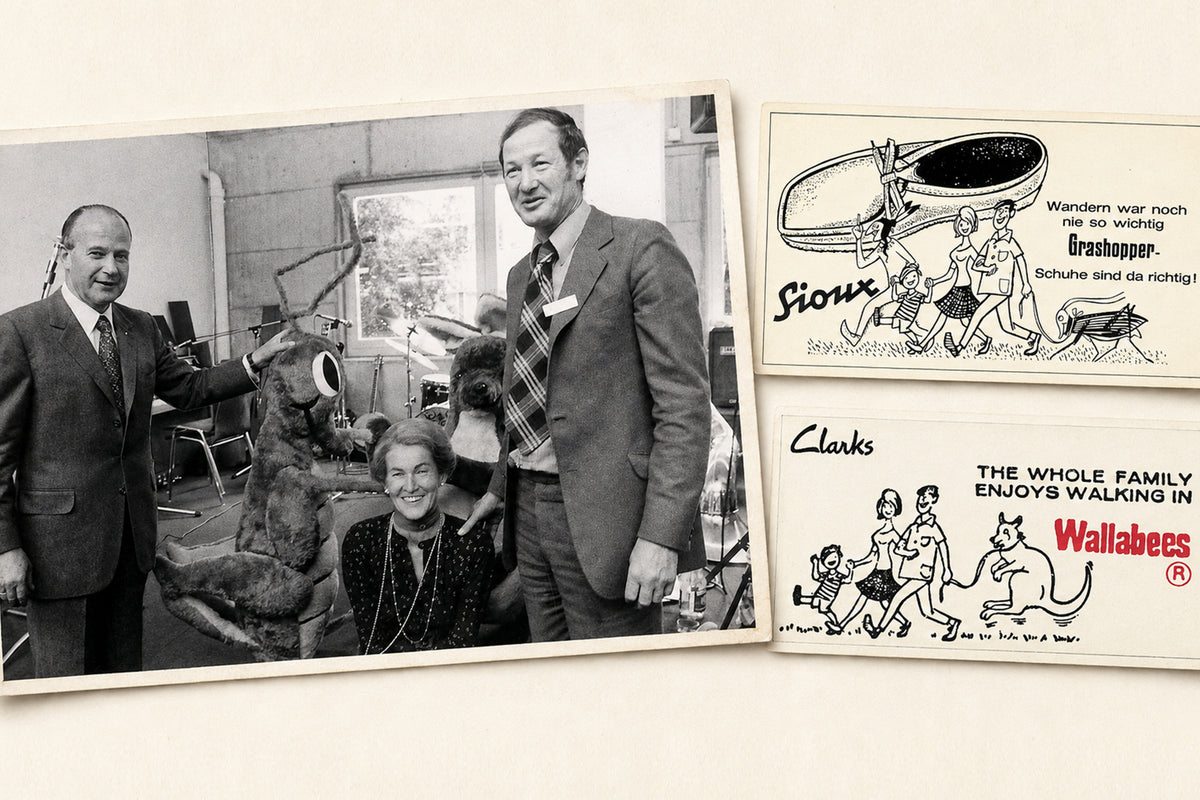
The success of the Grashopper does not go unnoticed internationally. The English shoe manufacturer Clarks acquires a license for the model from Sioux and distributes its own interpretation.

The collaboration highlights the impact that the shape developed by Sioux has far beyond Germany. The license agreement runs until 1996.

Sioux to be Olympic supplier

1972

Sioux to be Olympic supplier

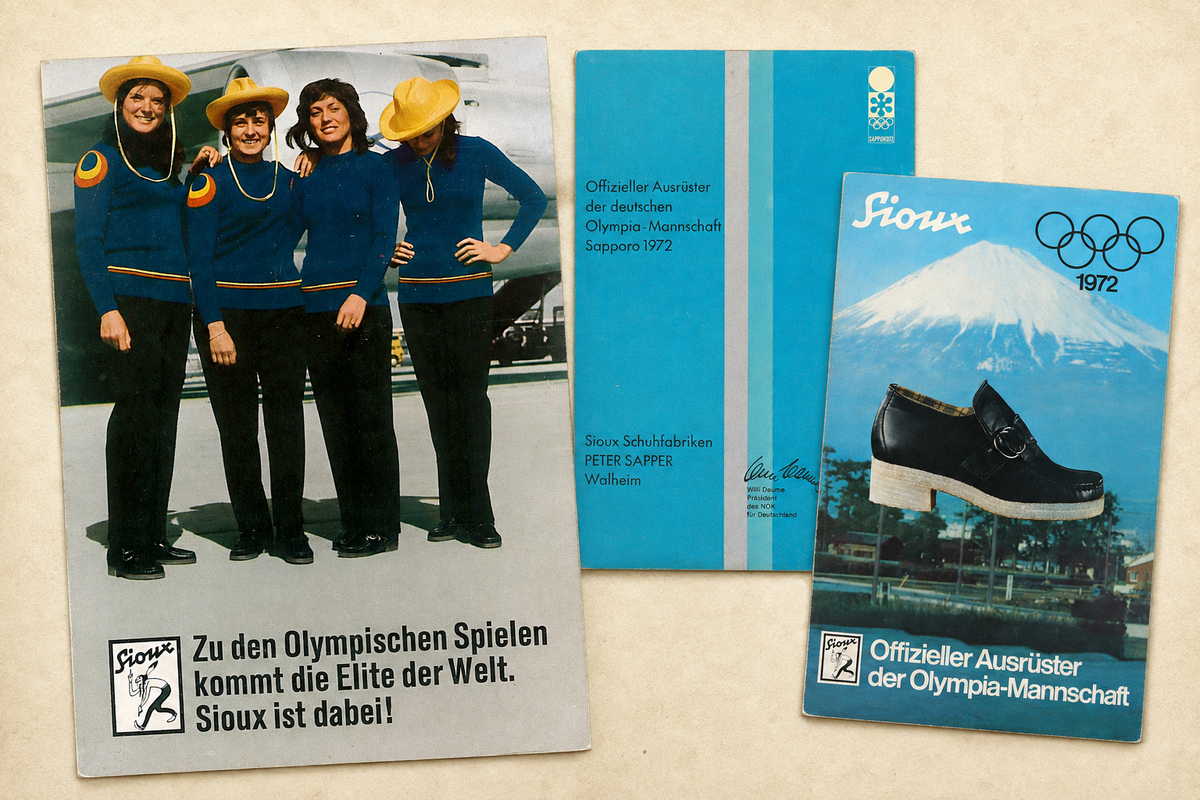
Sioux becomes the official outfitter of the German Olympic team. What started in 1972 developed into an exceptionally long partnership with German elite sports.

For more than four decades, Sioux accompanied German athletes to the Olympic Games – up to the 2016 Summer Olympics in Rio de Janeiro.

A Quarter Century of Sioux

1979

A Quarter Century of Sioux

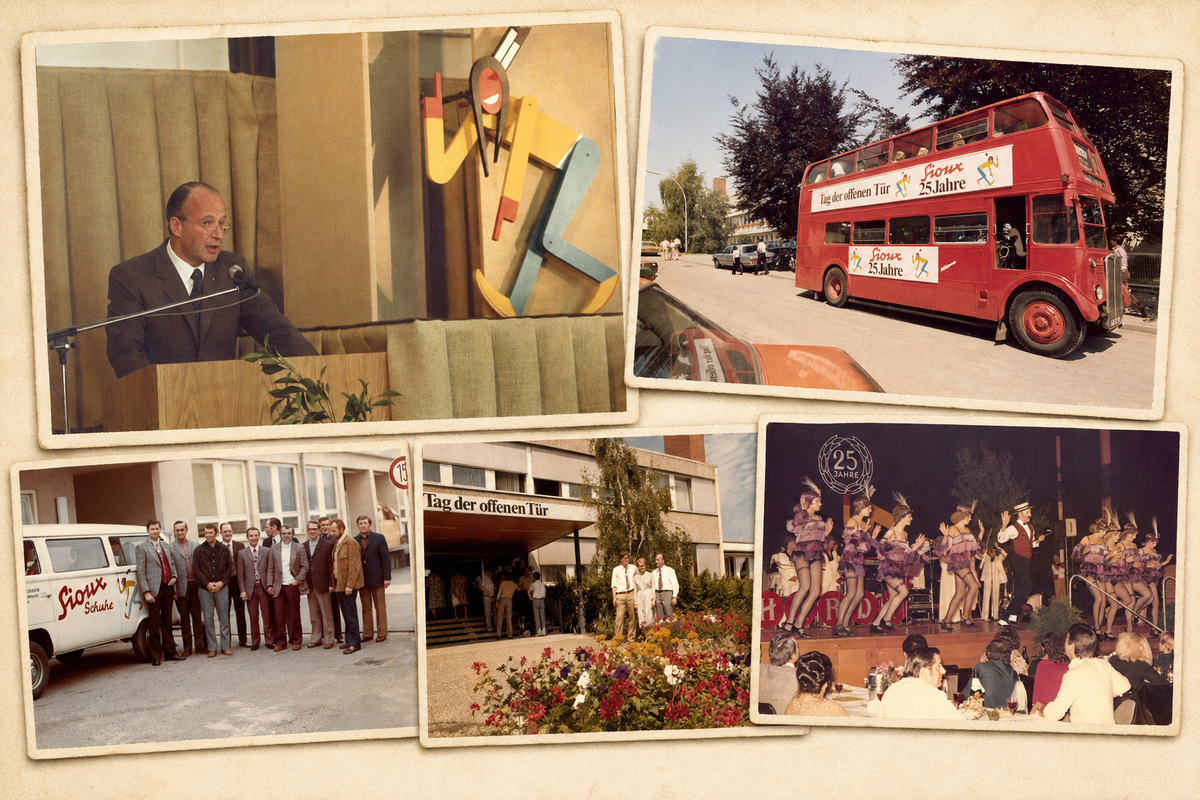
Sioux celebrates its 25th anniversary. What began as an idea for a small shoe factory in Walheim has long since become an established German shoe brand.

The commemorative speech for the anniversary is given by Lothar Späth, then Minister-President of Baden-Württemberg.

The next generation takes over

1981

The next generation takes over

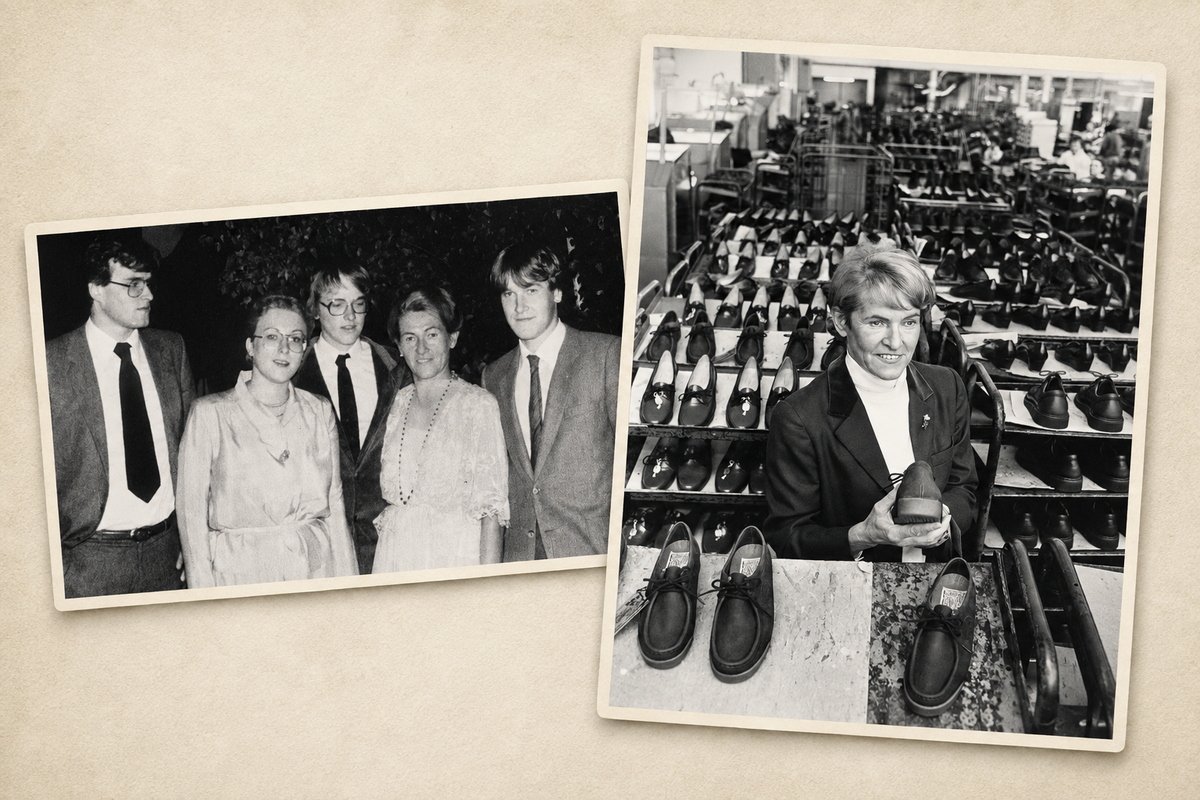
After the death of company founder Peter Sapper, his wife Karin Sapper takes over the management of the company.

Thus, Sioux remains in family hands even after the founder's death. This phase of the company's history only ended in 1992.

1998

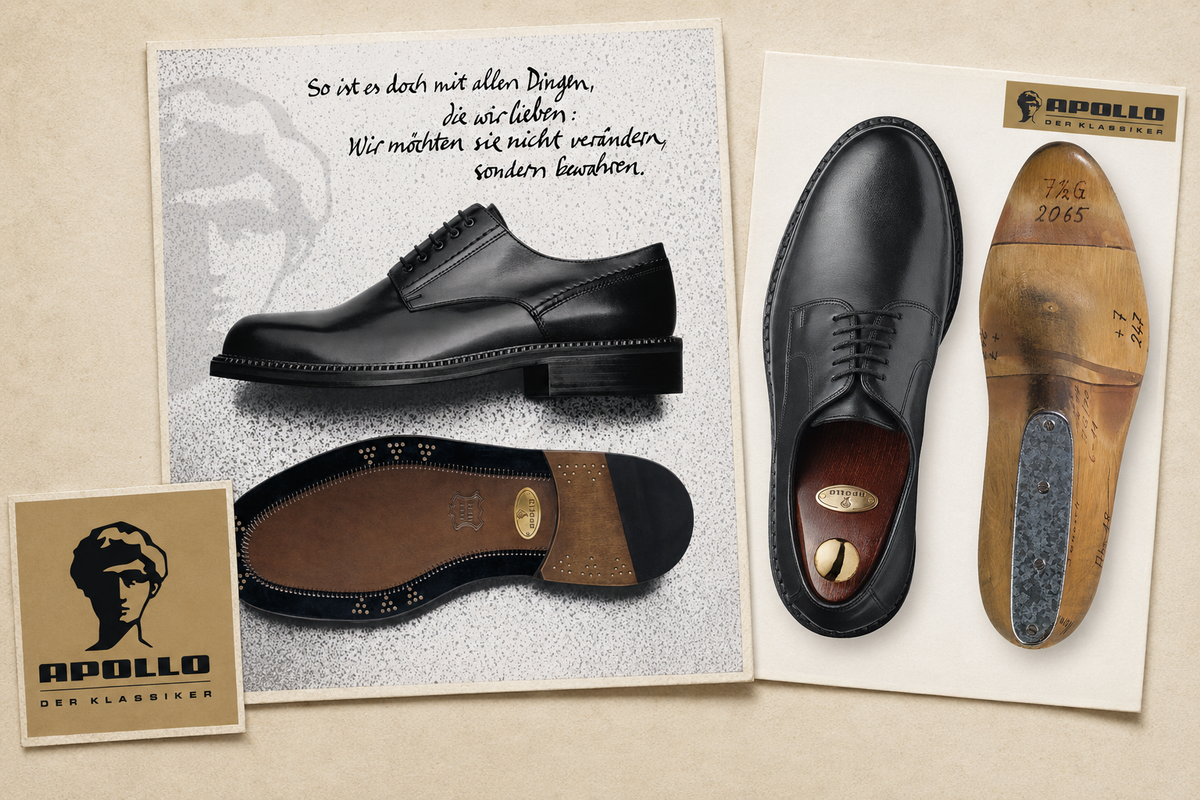
Apollo to become part of Sioux

With Apollo, Sioux expands its brand portfolio. The men's shoe brand stands for classic models and traditional shoemaking craftsmanship, thus complementing the existing collections.

Excellent shoes and excellent advertising

1999

Excellent shoes and excellent advertising

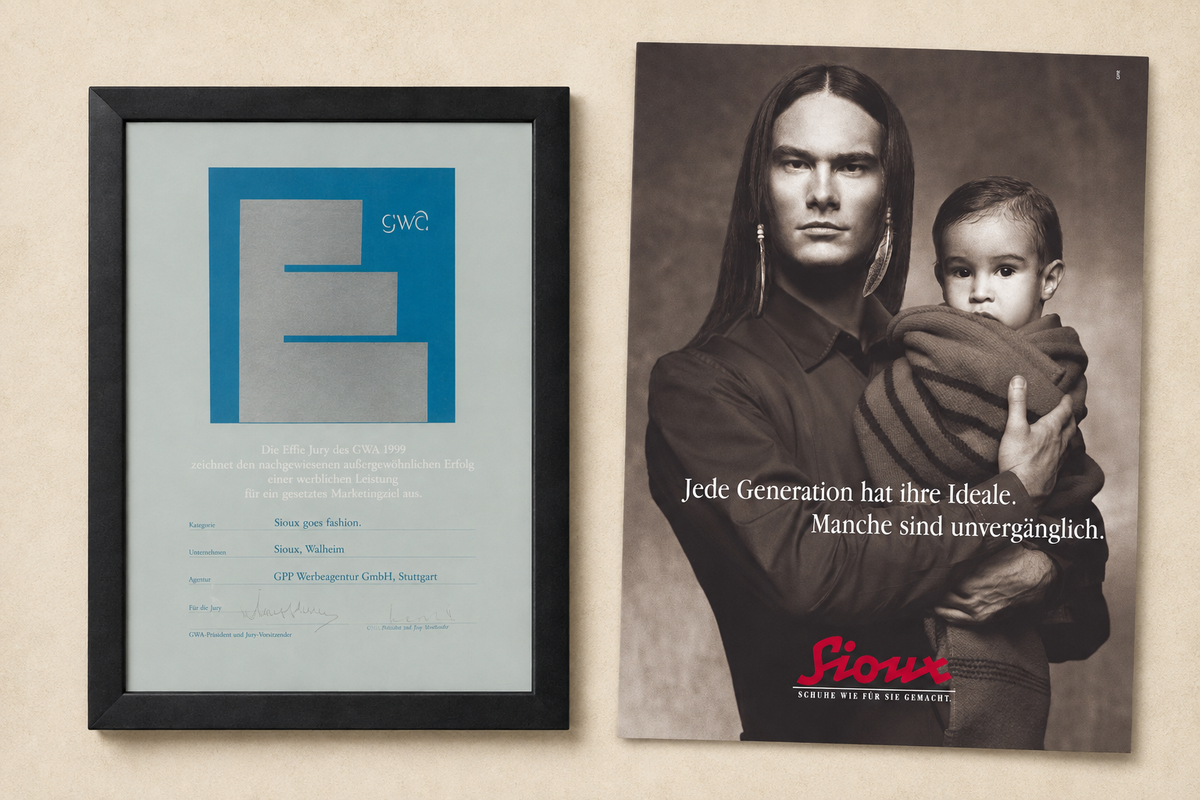
At the end of the millennium, Sioux received several important awards.

A "Silver Effie" honored the particularly effective brand communication. At the same time, Sioux received the "German Footwear and Leather Goods Award" for an exceptional and creative interpretation of the moccasin.

2004

50 Years of Sioux

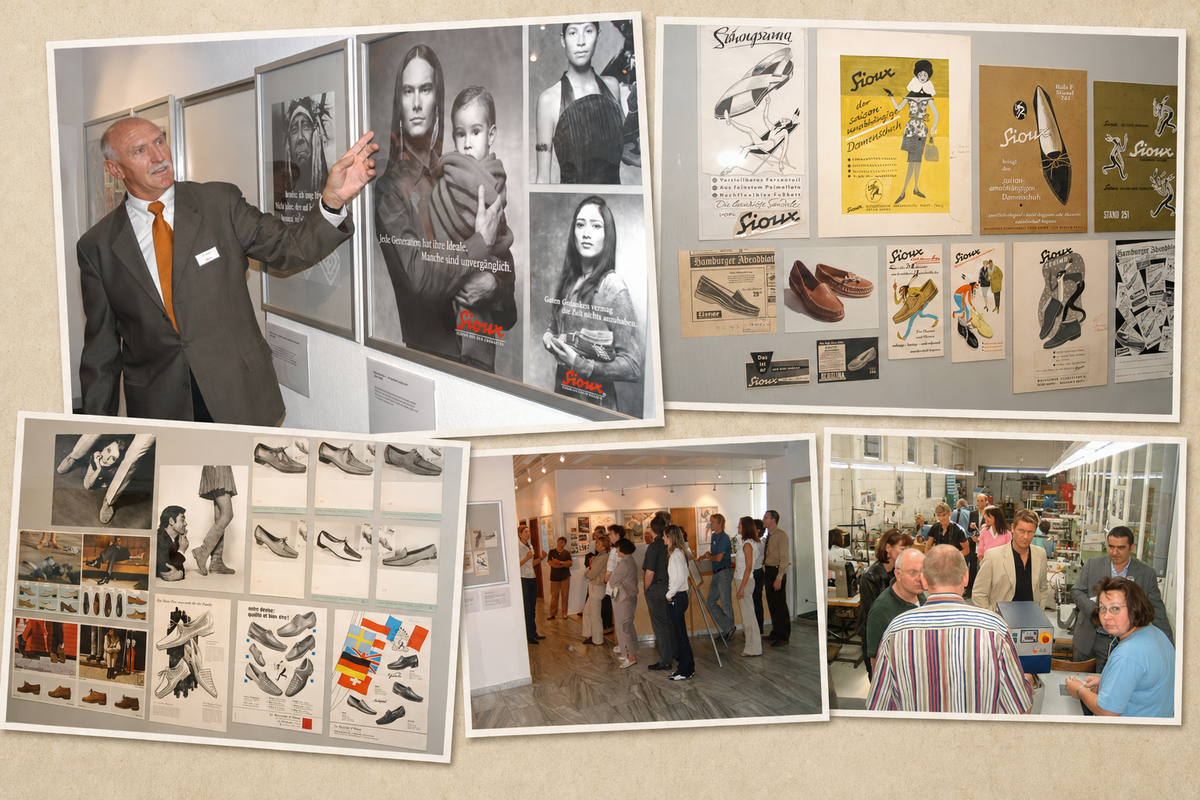
Half a century after its founding, Sioux celebrates its 50th anniversary.

An exhibition looks back at five decades of shoe history, advertising, and design. It also focuses on one of the most famous figures in the brand's history: the "fabulously elastic Sioux Indian."

2010

Back to the Family Business

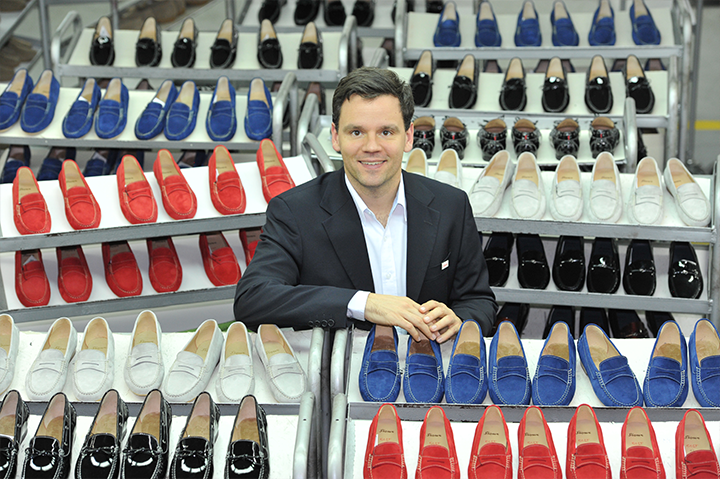
After various corporate affiliations, a new chapter begins for Sioux. A group of private shareholders led by Lewin Berner is joining the company and bringing Sioux back as a family business with a mittelstand character. Lewin Berner has also been the managing partner since 2014.

The aspiration remains the same as at the beginning: to preserve Sioux's tradition while simultaneously developing the brand and its products in a contemporary way.

2014

Two Icons Celebrate Anniversaries

Sioux turns 60 – and the Grashopper celebrates its 50th birthday at the same time.

To mark the anniversary, the two historic successful models Grashopper and Autoped are appearing in new versions. They show that good design does not have to depend on short-term trends: Both models originated decades ago and yet still look contemporary today.

Feel the Indian Spirit

2016

Feel the Indian Spirit

With "Feel the Indian Spirit", the brand is getting a new look. The campaign combines the long Sioux tradition with contemporary imagery and focuses on themes such as freedom, individuality, and craftsmanship.

This reinterprets the brand's history without losing sight of its origins.

Til Schweiger x Sioux

2019

Til Schweiger x Sioux

Together with actor and filmmaker Til Schweiger, the Sioux design team is developing its first shoe collection for men and women.

The collaboration will result in a long-term partnership. Natural colors, high-quality materials, casual sneakers, and reinterpretations of the Grashopper characterize the joint collections.

Tim Bengel x Sioux

2020

Tim Bengel x Sioux

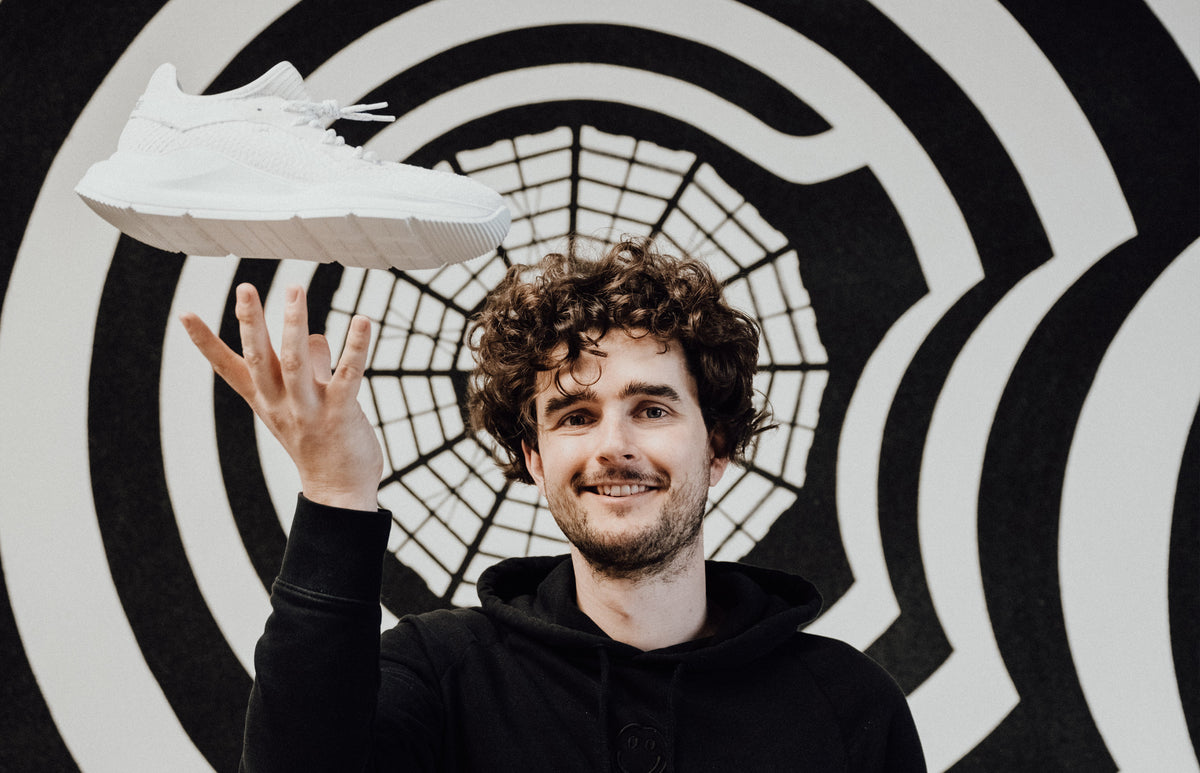
With Stuttgart artist Tim Bengel, Sioux is building a bridge between shoemaking, fashion, and contemporary art.

The limited-edition, vegan, and CO₂-neutral "StepOne" sneaker marks the beginning. Further joint projects will follow, temporarily transforming shoes into small, wearable works of art.

70 Years of Sioux

2024

70 Years of Sioux

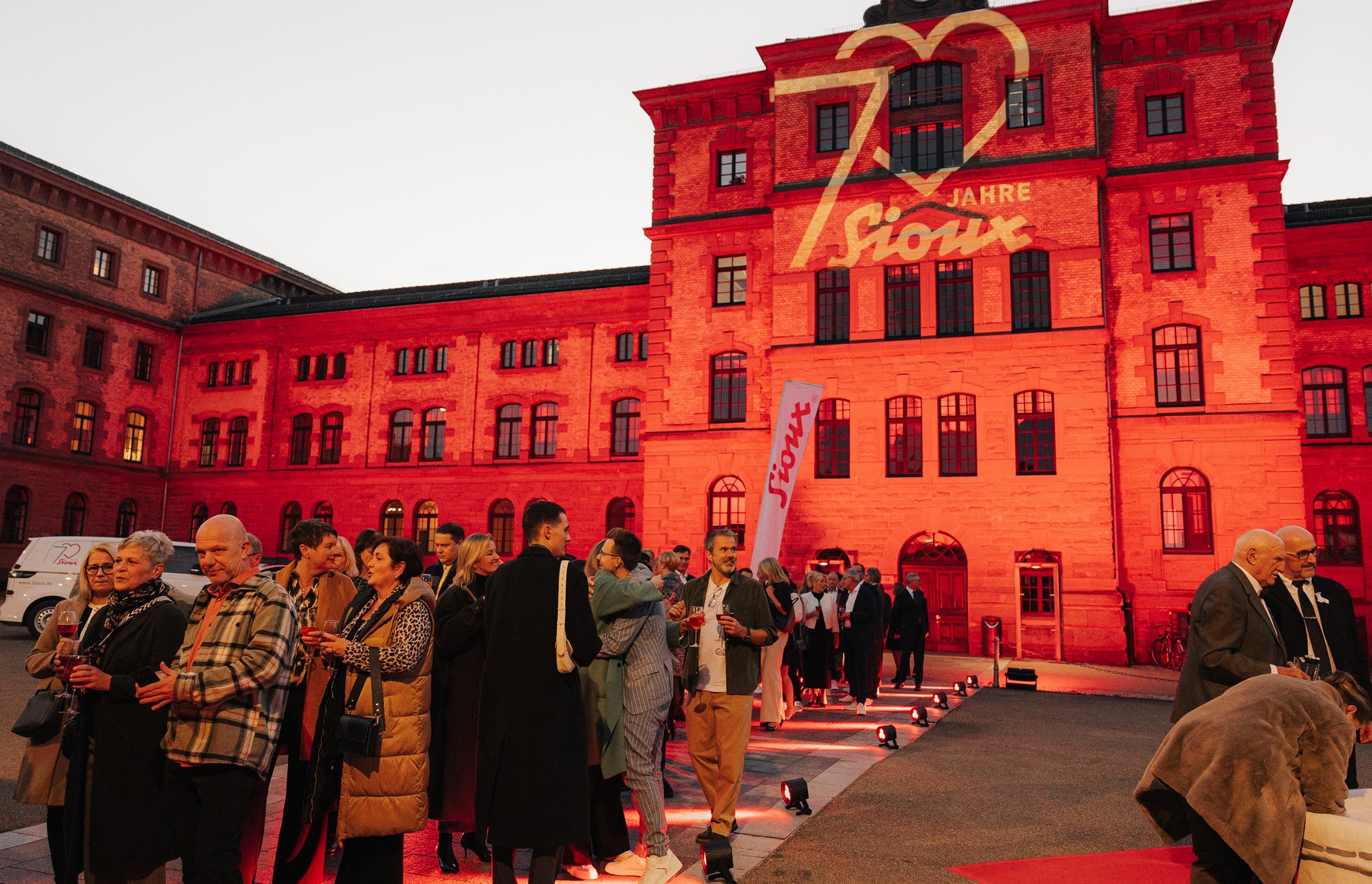
Seven decades after its founding, Sioux celebrates its 70th anniversary. What began in 1954 with the idea of the moccasin has evolved over generations.

What has remained is the commitment to combining craftsmanship, high-quality materials, fit, and comfort – and to continually re-imagining the Sioux tradition in a contemporary way.

Maite Kelly x Sioux

2024

Maite Kelly x Sioux

A new creative collaboration begins with Maite Kelly. The successful entertainer and fashion icon is developing her first shoe collection together with Sioux.

Her personal touch and fashion sense meet Sioux's many years of shoe expertise. This results in models that combine style, comfort, and personality.

Today

Rethinking tradition

More than 70 years after its founding, Walheim am Neckar remains the home of Sioux. Here, teams work on design, development, sales and marketing, among other things, and continue the ideas that have shaped the brand since 1954.

Much has changed since the first moccasins. But the underlying aspiration has not: to develop good shoes that combine careful craftsmanship, high-quality materials, a well-thought-out fit and comfortable wear.

Thus, the story of Sioux is not over. It continues with each new model.