 DE
DE EN
EN FR
FR NL
NL
IMPREGNATING YOUR SHOES CORRECTLY
Keeping your feet dry
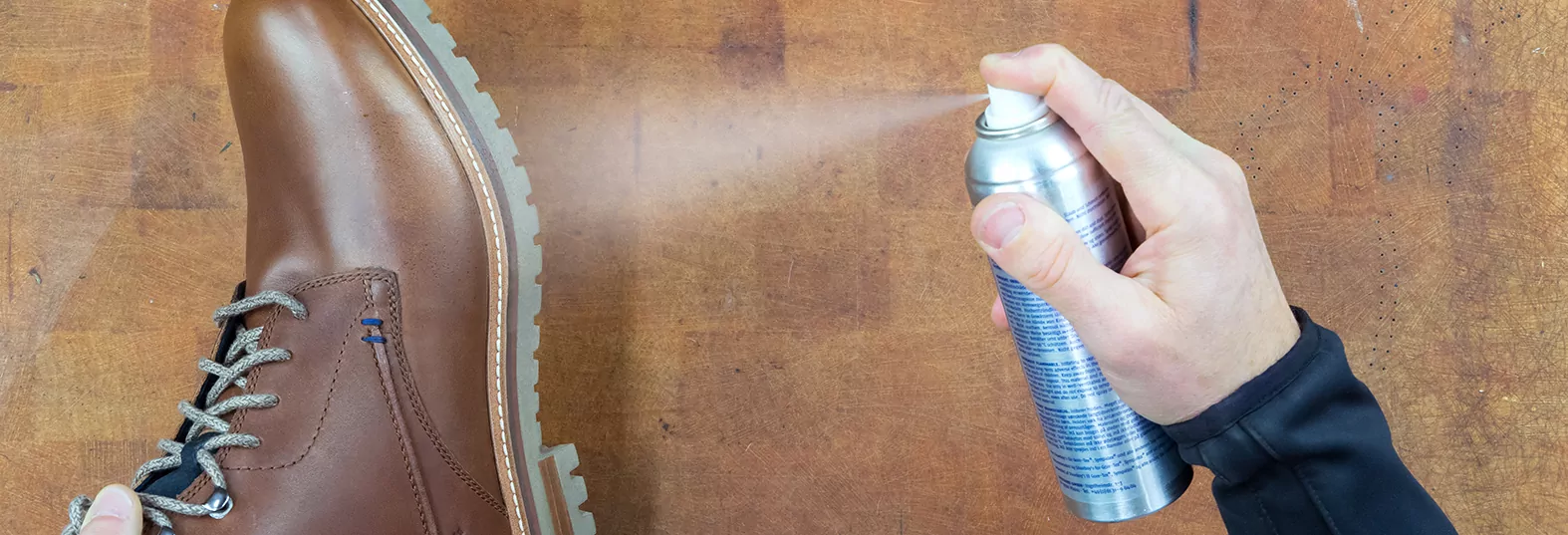
Impregnating your shoes – arguably the most well-known way of caring for your own shoes. Find out here exactly how the impregnation process works, what factors are important to consider with this treatment and the shoes which benefit most from this process.
What is waterproofing?
The word “ waterproofing “ is derived from the Italian verb “ impregnare „. This means impregnating something with an active ingredient. In waterproofing, a so-called impregnating agent is applied to a material that changes the properties of the treated material.
The term waterproofing describes a process used to finish textiles and leathers. This makes the materials water-repellent (hydrophobization). Although the treatment methods are different, they are always based on the application of certain film-forming substances (mostly paraffin and wax emulsions, silicones or corridor carbons).
Why is leather hydrophilic (water-loving)?
Shoe leather (with the exception of greased leather) is a natural material which attracts water (i.e. is hydrophilic) due to the pores and fibre structure of the leather. Some of the pores on the surface of the material are deliberately left open during the tanning and dressing process of shoe leather in order to maintain its breathability. This means that shoe leather in not 100% waterproof like other materials. Suede leather is particularly attracted to water due to its open fibre structure, whilst smooth leather and patent leather are less so.
This water-absorbing property of leather however also describes one of the material’s particular benefits, as its ability to absorb, store and release a lot of moisture gives leather an ideal characteristic for the inside the shoe (absorption and regulation of foot sweat).
Logically speaking, this positive can turn into a negative when it is damp and cold outside.
How does an waterproofing affect shoe leather?
Leather is made water-repellent (hydrophobic) by waterproofing the surface (outside of the shoe). A special layer applied by the impregnation reduces the cohesion forces of the material and the cohesion forces of the water predominate, resulting in the formation of drops - the water rolls off the impregnated leather. Despite the impregnation, the existing breathability of the shoe leather is maintained. This guarantees a sweat-free feeling even in winter - despite the impregnation.
How important is the waterproofing of shoes?
It can be summarised briefly: It is very important. Because the waterproofing of shoes is certainly the most important and most widespread measure to prepare your own shoes for everyday life in autumn and winter or on rainy days. All open-pored, fine shoe leathers should be impregnated, such as suede (suede leather and nubuck leather), which are naturally particularly sensitive to moisture and dirt.
Shoe leather is usually waterproofed in tanneries. However, this is not the case with all manufacturers. But at Sioux we always make sure that all our shoes are waterproofed at the point of sale and are therefore water- and dirt-repellent.
The waterproofing does not only make the upper material of the shoe water-repellent. There are also positive side effects: Not only moisture, but also the penetration of dirt is prevented. Another positive side effect is that the waterproofing preserves the colour and prolongs the durability of the shoes. Beautiful, because by impregnating regularly you will simply enjoy your high-quality pair of Sioux shoes for longer.
How do I waterproof my shoes or boots correctly?
- Completely remove dirt and dust from your shoes and let them dry to guarantee a complete waterproof finish.
- Waterproof your shoes as evenly as possible at a distance of 20-30 centimetres. Please make sure that not only the leather parts, but also the seams, edges and laces.
- Repeat this procedure 2 to 3 times. By the way, several thin layers seal much better than one thick layer. Make sure that the shoes do not get too wet.
- Afterwards the shoes should be able to dry completely again before it goes out into mud and rain.
It is best to waterproof the shoes outdoors or in well-ventilated rooms in order to avoid damage to health caused by inadvertent inhalation of aerosols.
How often do shoes need to be waterproofed?
When waterproofing, the following applies: „Often a lot helps“ and not „a lot helps a lot“. At Sioux, we make sure that the shoes have been carefully waterproofed at the factory. Nevertheless, we recommend that you waterproof your shoes regularly to freshen up the existing protection. The flexing movement of the shoe leather during walking and minor collisions remove the waterproofed layer and the effect of the waterproofing agent diminishes in some areas. It should be borne in mind that the impregnation only applies a superficial film to the shoe. Therefore we recommend a regular waterproof the shoes especially in winter after wearing them 10 times. If the shoes have been exposed to a heavy rain shower or slush attack, the waterproofing should be refreshed immediately after drying.
At Sioux, shoes made of smooth leather are mainly made of barrel-dyed leather or hand-dyed leather directly on the shoe. The colours are transparent and give the surface a depth. When using waterproof sprays based on organic solvents, the colour of the leather can be damaged by improper use of the waterproofing. Therefore, the waterproof spray should dry completely after application before it is mechanically applied to the leather. In addition, the waterproofsprays should be tested on a less conspicuous spot on the inner joint of the shoe to prevent the solvents from attacking the leather colour.
Is a cheap waterproofing spray worse than an expensive one?
In the case of waterproofing spray, the price of the product (unlike other shoe care products) tends to be secondary. There are differences in protection against water, mud and ice, but these are marginal. For the normal requirements to which shoes and waterproofing sprays are exposed in the case of a city Indian or a city Indian, the effect of waterproofing sprays such as those available in drugstores is completely sufficient. At this point, it is important to stress once again that the regularity of the impregnation carried out is important when impregnating shoes.
For those who constantly expose their shoes to very high stress or want to take care of them additionally, the waterproofing spray from the specialist retailer is probably the better choice, as other care substances are often incorporated.
Is waterproofing shoes harmful to the environment?
Waterproofing sprays do not have a good reputation when it comes to environmental protection. Most well-known manufacturers of waterproofing sprays only use components in their waterproofing sprays that are classified as harmless to human health and the environment. However, it is important not to inhale the aerosols, which would always be harmful, as the active ingredients have lost nothing in the lungs. We recommend pump sprays to prevent the release of propellants. Although the industry has switched to CFC-free aerosols, it is best not to use propellants at all and to rely on the power of your index finger.
OUR PRODUCT RECOMMENDATIONS FOR YOU

Taking breaks from wearing your shoes
Taking breaks from wearing your leather shoes makes a significant impact in terms of increasing their lifespan. Those who regularly take a break from wearing their shoes benefit from a high standard of shoe hygiene as well as being able to preserve the optimal fit of their shoes for as long as possible.

Taking your shoes on and off properly
You may well believe that you already learned how to take your shoes on and off as a toddler. That is true of course, but we are concerned with doing this in a way that best preserves your high-quality leather shoes.


Cleaning your shoes correctly
Shoe cleaning is an art in itself and a task that fewer and fewer people are unfortunately taking the time to do. This is a shame because shoes are at their best when they are cleaned and maintained well. Not only this, but we also believe that it puts people in good stead and gives off a neat and orderly overall impression to not only take pride in their outer clothing, but also keep their footwear well-maintained. “Smart up top, casual on the bottom” is not a motto that we recommend following for your style inspiration, even with laid-back fashion trends that are popular nowadays.

Shoe care products
The impeccable condition that your shoes arrive in will show signs of wear and tear over time. It is worthwhile using the correct care product for your shoes in order to counteract this.

Shoe brush
A shoe brush is an essential tool for every type of shoe care. It is important to use the correct shoe brush for the respective outer material of the shoe and to preserve the leather rather than unintentionally cause additional wear. Thoroughly caring for your shoes always starts with brushing the shoes and ends with the final polishing.

Shoe polish
Just like our skin, leather also needs regular care in order to stay soft, durable and crease-free. The same goes for our shoes. Those who regularly take the time to polish their shoes provide them with suppleness and elasticity whilst protecting them from moisture.

Suede Care
Our suede leather is our most fashionable and luxurious leather. Impregnation spray is often the first thing that comes to mind when it comes to the topic of shoe care, and rightly so, however impregnation is only half of the story. Find out the reasons why here.

Shoe construction techniques
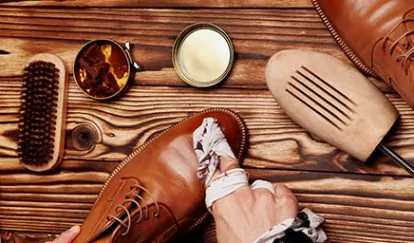
Why are there so many different shoe models? The construction technique used by Sioux depends on what the shoe will be worn for and what the wearer requires from it. Because, ultimately, the shoe must have a perfect fit.

Things you should consider when buying shoes
The following 10 tips will give you a practical guide and help you with your next shoe purchase. Besides the right shoe size and width, an optimal fit, skilful workmanship and the use of high-quality materials for the upper, lining and outsole are also important factors when it comes to quality and selection. We want you to stay feeling comfortable in your shoes for as long as possible.

Crepe sole
Learn more about what is undoubtedly the most natural form of comfort - everything about this Sioux speciality can be found here.

Labelling of materials
A question frequently asked by our customers is: “How can I be sure that the material used is really genuine leather?"

The history of footwear
More than 40,000 years ago, people developed a need to protect their feet against adverse external conditions. It took several centuries, however, until the fashionable and comfortable footwear that we are familiar with today became available.

Sioux hallgus protect
The combination of high-quality leather and our innovative Sioux-Tex climate membrane will give your feet that “feel-good” feeling: whilst moisture and vapour are quickly wicked away from the shoes, water from the outside has no chance of getting in, meaning your feet are always warm and dry.
Sioux natural move system
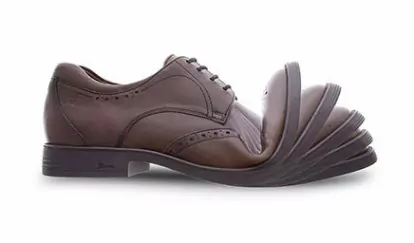
The combination of high-quality leather and our innovative Sioux-Tex climate membrane will give your feet that “feel-good” feeling: whilst moisture and vapour are quickly wicked away from the shoes, water from the outside has no chance of getting in, meaning your feet are always warm and dry.

SiouxTex
The combination of high-quality leather and our innovative Sioux-Tex climate membrane will give your feet that “feel-good” feeling: whilst moisture and vapour are quickly wicked away from the shoes, water from the outside has no chance of getting in, meaning your feet are always warm and dry.

Shoe lining
Consumers often only pay attention to whether they like a shoe and whether it fits well. What is inside the shoe should also be a decisive factor: the shoe lining is often underestimated when buying shoes, despite being a key factor when it comes to comfort and health. Below we will explain the various types of shoe lining, their uses and the importance of shoe lining when it comes to your well-being.

Shoe soles
Whether they are a lightweight and flexible, feature unique air-cushioning or have a timeless and elegant leather sole: it's the perfect join of the shoe upper and sole which is the finishing touch to each and every shoe.
Shoe size and fit
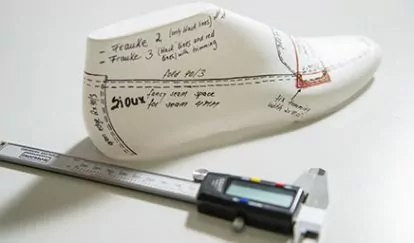
As the foot performs a rolling motion when walking, it bears your weight in various areas and thus changes shape in doing so. The hallmark of a perfect-fitting shoe is that the toes and the foot itself have enough space within the shoe throughout this rolling motion and that the heel experiences sufficient grip. When a shoe fits, the heel does not slip out of the back of the shoe, and the shoe sits so perfectly in the midfoot area that the foot is supported – and is unable to slip forwards – hence the shoe pinching.

Shoe leather
Choosing the leather is very easy when it comes to Sioux shoes: we only settle for the best.

Shoemaking
There are lots of steps involved in making a shoe. From developing the model in the first instance, to the stamping, sewing and putting the finishing touches to the shoe at the very end.

Grashopper
In the 1960s, the natural form moccasin was a revolution. Today, the cult shoe is more topical than ever as a pioneer in modern casual wear.
